The name
The photophone
In 1880, four years after the telephone, Alexander Graham Bell and his assistant Charles Sumner Tainter transmitted a voice without wires, carried on a beam of sunlight.
How it worked
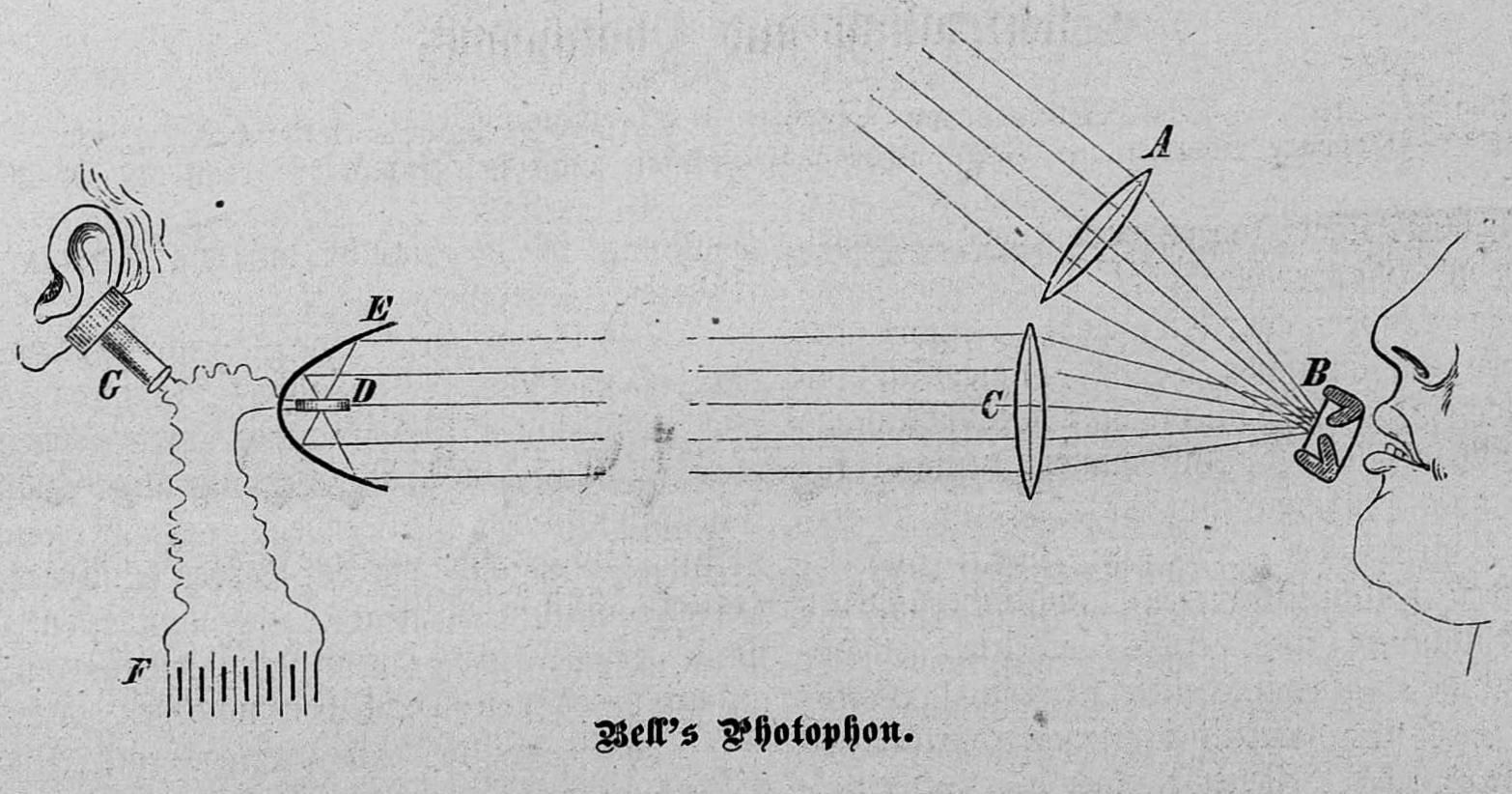
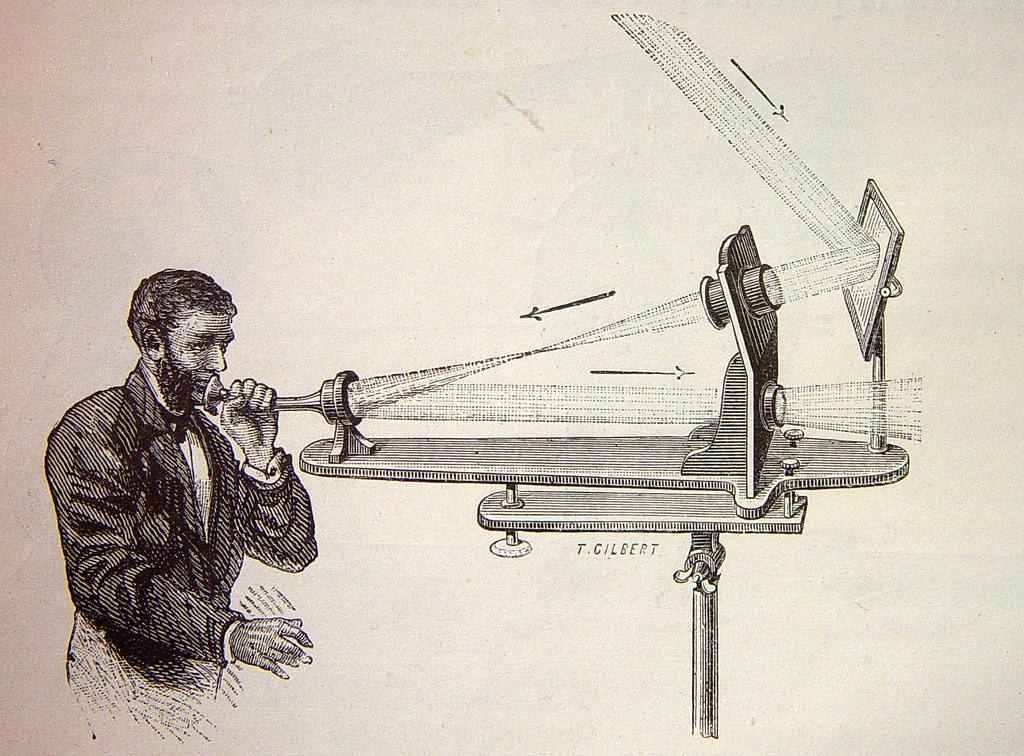
The transmitter was a very thin mirror. Speaking into it made it vibrate, and the beam of sunlight bouncing off the mirror grew brighter or dimmer with the rhythm of the words.
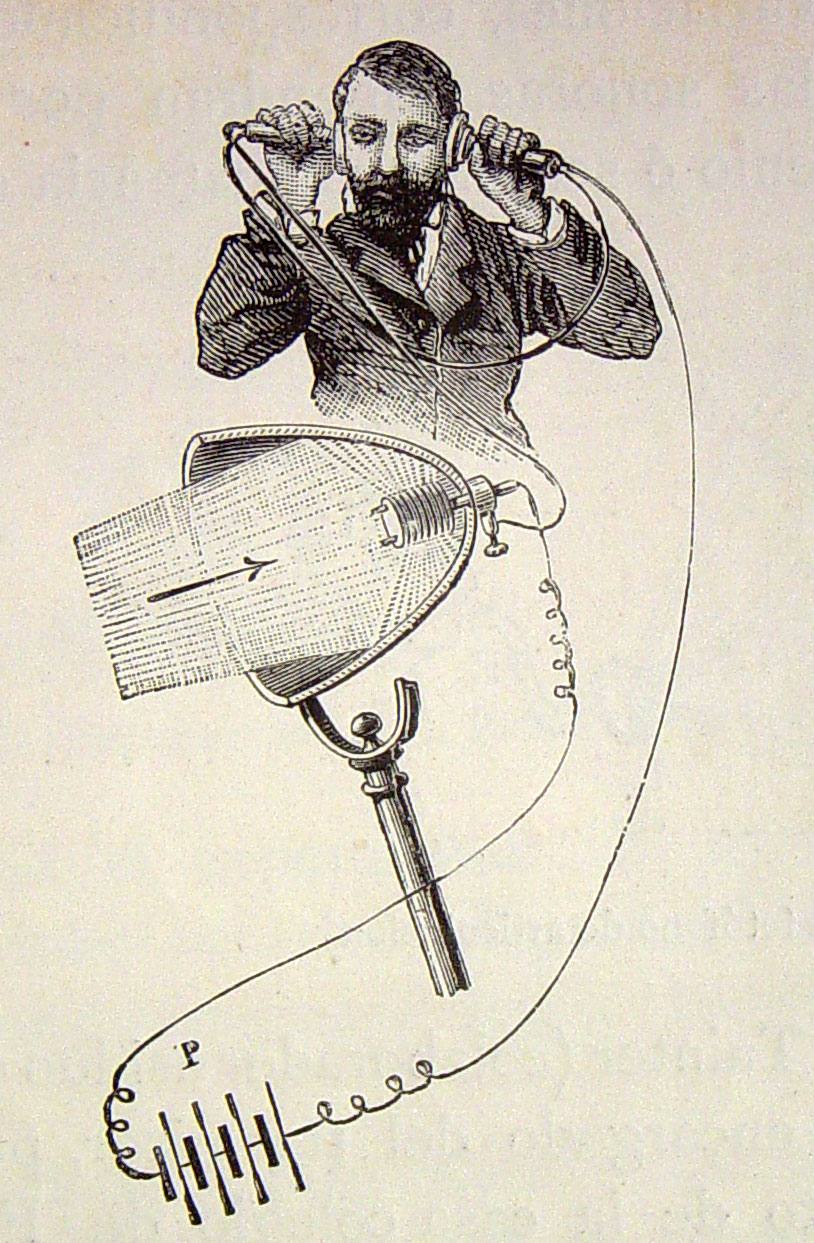
Far away, the receiver gathered that light with a parabolic mirror. At its focus sat a selenium cell, a material that conducts more or less electricity depending on the light it receives. The cell was connected to an earpiece: the changes in light became changes in current, and the current became a voice again.
The best-known test took place in June 1880 in Washington, between the roof of the Franklin School and a window of Bell’s laboratory, about 200 meters away. Bell considered it the most important of his inventions. It had no commercial use in its time, because it depended on the sun and on nothing getting in the way, but the principle of carrying sound on light came back in the optical soundtracks of sound film and, much later, in fiber optics.
The logo
The mirror that receives the light
Fototoma’s symbol is the photophone receiver seen from the side: the parabolic mirror, three parallel rays of light coming in, and the point where they converge, which is where the selenium cell sat, the place where light turned into sound.
It seemed like a good image of what we do: take in a film, a commercial or a session, and give it back with sound.